Marvel Rivals hardstuck claims get tested as Flats spectates a Grandmaster who blames his teammates
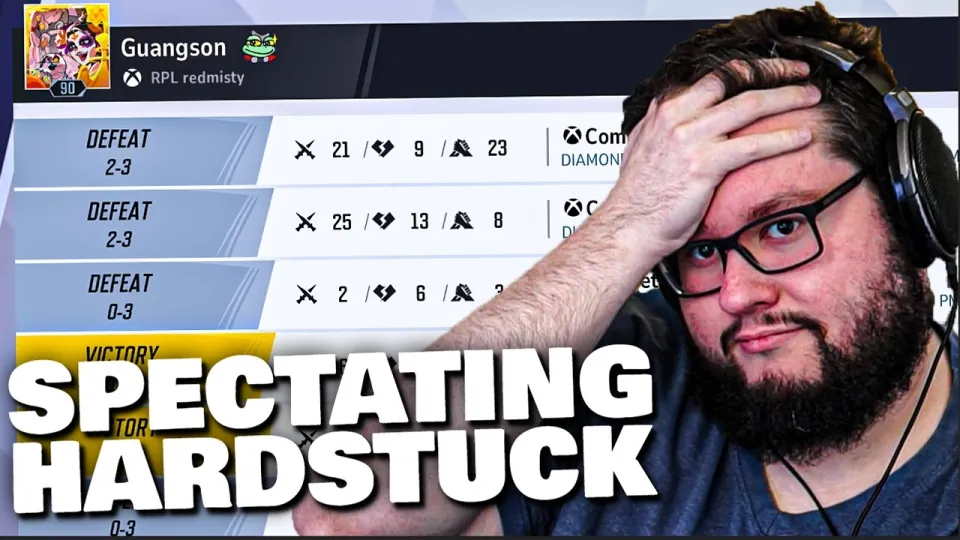
Video: I Spectated Someone Who Claimed To Be Hardstuck In Marvel Rivals
Want articles like this for your own video to promote it on YouTube and Google? Order them through the Telegram bot @sat_sit_bot. It writes articles around your video, embeds the video and publishes them on popular niche websites (no ads). Try it free: 50 articles on us.
· based on the channel Flats
A Marvel Rivals player who insists he is hardstuck in Grandmaster is usually wrong about why, and Flats proved it by spectating one such player live. The session showed a Spider-Man main who had switched to support, skipped health packs, healed almost nobody, and still blamed his teammates for every loss. If you want to watch these breakdowns as they happen, Flats streams them on Twitch, where the full VODs and live spectating sessions go up first.
What the Marvel Rivals hardstuck claim actually looked like
The core claim was simple: the player believed his rank reflected bad teammates rather than his own decisions. Flats loaded into a spectator view and followed the player through a match to check that claim against the footage.
What the spectate revealed was a support player who spent most of the match doing very little of the job his role requires. He played Rocket Raccoon with almost no healing output, then moved to Cloak & Dagger and spent long stretches as Dagger while the team needed the Cloak side of the kit for damage and escape. The pattern is familiar to anyone who has climbed in Marvel Rivals: the role is selected, but the responsibilities of the role are not performed.
The most telling moment came when Flats silently watched the player walk straight past a health pack while apparently looking for a health pack. That single clip does more to explain a stuck rank than any stat line, because it shows a player navigating the map without reading it.
The Rocket Raccoon and Cloak & Dagger problems
Rocket Raccoon is a healer first, and a Rocket who ignores healing is not a damage dealer, he is a liability. The player's Rocket produced minimal healing while the team took constant chip damage, which forces every fight to be won twice: once against the enemy and once against your own support line.
Cloak & Dagger has the same trap in a different shape. Dagger is the healing stance and Cloak is the utility and damage stance, and a player who camps one form loses half the character. Sitting in Dagger while the team needs a Cloak escape or a blind is not a safe style, it is a passive one, and passive supports lose long fights in Grandmaster where enemies punish slow healing.
The broader point is that Marvel Rivals rewards role fluency. A support who cannot swap stances, position behind cover, and keep the tank alive through burst damage will hover around the same rank no matter how many hours they queue.
Why the Spider-Man main detail matters
Flats noted the player was a Spider-Man main before switching to support, and that history explains a lot of the behavior. Dive heroes teach a player to look for picks, flanks and solo plays, and those instincts do not transfer cleanly to a backline role.
A Spider-Man player who moves to support often keeps the dive mindset: he drifts forward, looks for damage, and forgets that his job is to keep the tank and the other support alive. The result is a support who plays like a flanker and a team that dies in every extended fight. The account history is not an excuse, it is a diagnosis, and it is the reason coaching a support player often starts with unlearning damage instincts.
Typical questions from viewers about Marvel Rivals ranked
Viewers watching the spectate raised several recurring doubts that come up in almost every Marvel Rivals ranked discussion.
- Can teammates really hold you back? Yes, in individual matches. Over a large sample, though, the only constant variable is your own play, and a negative win rate while climbing points to something other than luck.
- Is a negative win rate compatible with climbing? It can be, because rank points and performance modifiers do not perfectly track win rate, but it means the account is being carried by the system rather than by the player.
- Is Grandmaster a high rank in Marvel Rivals? It sits near the top of the ladder, which is exactly why a Grandmaster support skipping health packs is so jarring to watch.
- Does switching roles reset your skill? No, but it resets your habits. A dive player who moves to support keeps dive instincts and has to consciously replace them.
The consensus in the audience was blunt: ego without skill is a worse problem than a bad rank, because it blocks the one thing that fixes a rank, which is honest review of your own footage.
What a stuck Marvel Rivals player should change first
Accountability is the fastest lever a stuck player has, and it costs nothing. Before blaming teammates, a support player should review three things in their own replays.
- Healing output per fight: if the tank dies while you are alive and in range, the problem is positioning or target priority, not the tank.
- Stance and form usage: track how long you spend in the wrong form on Cloak & Dagger, or how often you fire healing versus damage on Rocket.
- Map awareness: count the health packs you walk past and the cover you ignore. The health pack clip in this session is the standard, not the exception, for low-accountability players.
Flats is known for Overwatch coaching and has carried the same review style into Marvel Rivals: watch the footage, pause on the mistake, and let the player explain it. That format works because it removes the argument. The replay does not care about your rank or your ego.
Where to follow Flats and his Marvel Rivals breakdowns
All of the channels tied to this content are listed below, so you can pick the platform you actually use.
- Twitch for live streams and spectating sessions
- Discord for the community and coaching discussion
- Twitter for stream announcements
- TikTok for short clips
- Facebook for updates
The verdict on the hardstuck Marvel Rivals experiment
The player who claimed to be hardstuck in Marvel Rivals proved the opposite of his own point: his teammates were not the reason he was stuck, his own decisions were. Flats turned the session into a clean lesson in accountability, from a Rocket Raccoon with no healing to a Cloak & Dagger who never swapped forms to a player who walked past the health pack he was looking for. The audience reaction was unanimous that this is the teammate everyone meets at 99 of 100 points toward a rank-up. If you want more of these breakdowns, watch Flats live on Twitch and judge the next hardstuck claim for yourself.
Key takeaways
- Flats spectated a Marvel Rivals player who insisted his Grandmaster rank was the fault of teammates, not his own play.
- The player is a Spider-Man main who switched to support and produced a low-damage Rocket Raccoon and a passive Cloak & Dagger.
- Flats pointed out the player walked past a health pack while searching for a health pack.
- Viewers noted the account was climbing with a negative win rate, which they see as a wider Marvel Rivals ranked problem.
- The session became a case study in ego versus accountability rather than a coaching session.
Questions & answers
Why do players claim to be hardstuck in Marvel Rivals when they are not?
Most hardstuck claims come from a mismatch between rank and self-assessment. A player reaches Grandmaster through volume of games or performance points, then assumes the rank means his mechanics and decisions are at that level. When losses pile up, the easiest explanation is teammates, because it requires no review of his own footage.
Is a negative win rate enough to climb in Marvel Rivals?
It can be, depending on how rank points and performance modifiers are awarded, but it is a warning sign rather than a flex. An account that climbs while losing more than it wins is being supported by the system, not by the player's impact, and that gap becomes obvious the moment someone spectates the matches.
What is wrong with playing Rocket Raccoon as a damage dealer?
Rocket's value comes from sustained healing and his revive beacon, not from his gun. A Rocket who prioritizes damage leaves the team without a reliable heal source, which forces every fight to be won twice and makes the tank's job impossible. Damage on Rocket is a tool for self-defense and finishing kills, not the game plan.
How should a Cloak & Dagger player split time between the two forms?
Dagger should be the default for healing and area control, with Cloak used for the blind, the damage window, and the escape. A player who stays in one form the entire match is throwing away half the kit, and in high ranks that lost utility is exactly what turns close fights into losses.
Source: I Spectated Someone Who Claimed To Be Hardstuck In Marvel Rivals · Markdown version